

Inside our Pilot: Fragmentomics, CNVs and Explainable AI (XAI) for Cancer Detection
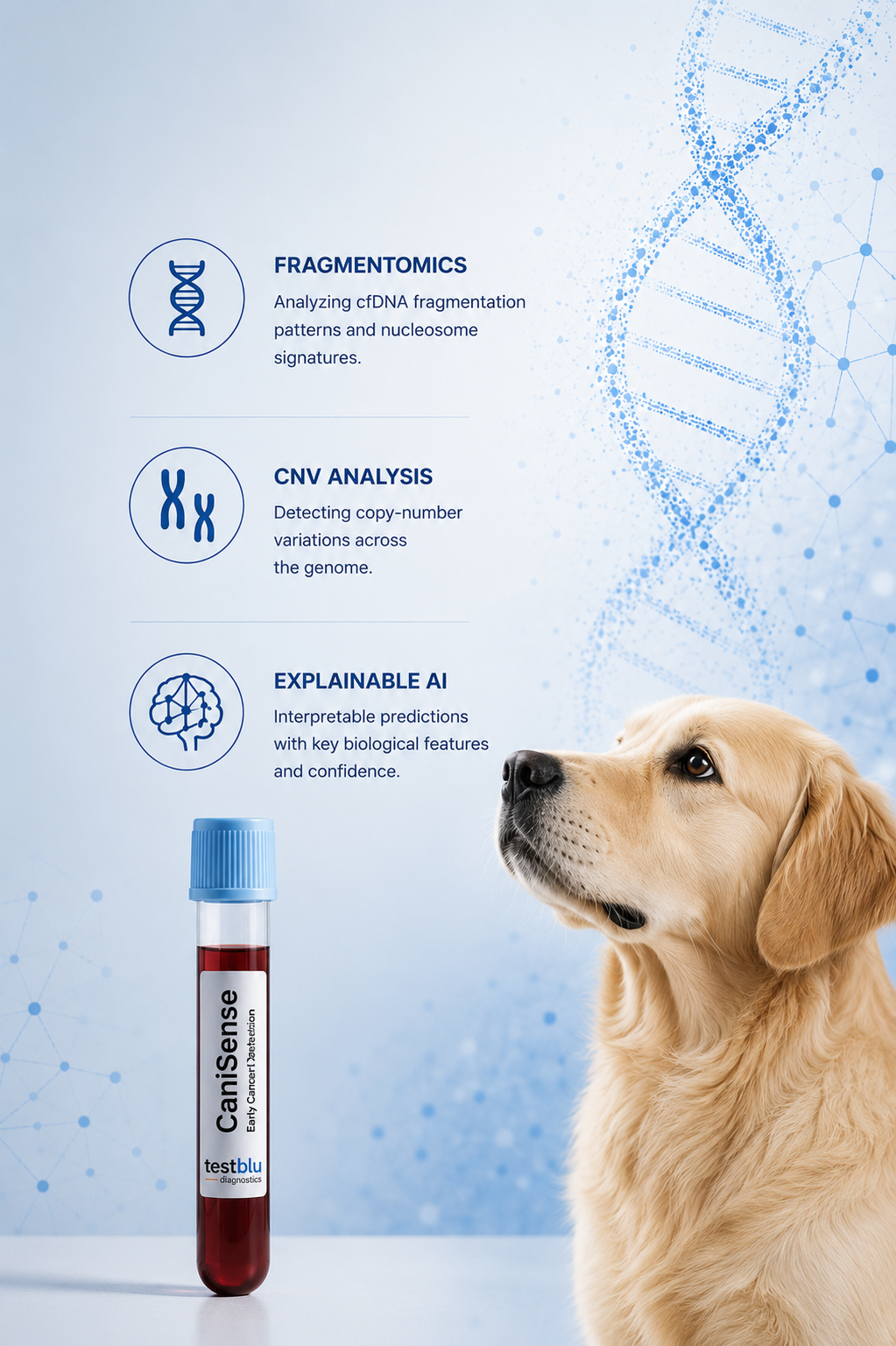
Cancer-derived cell-free DNA carries information not only in its sequence, but also in how it is fragmented and distributed across the genome.
Fragmentomics analyses features such as fragment length, fragmentation patterns and nucleosome-related signals.
These characteristics can differ between healthy and cancer-derived cfDNA and can therefore support blood-based cancer detection. Copy-number variation analysis provides a complementary signal by identifying genomic regions that are abnormally gained or lost. Because many tumors show characteristic chromosomal instability, these alterations can be detected from genome-wide sequencing data and used as evidence of tumor-derived DNA.
For CaniSense, combining fragmentomic and CNV features allows the system to evaluate both structural changes in the genome and changes in DNA fragmentation. Additional information such as mutations, methylation, cfDNA concentration, protein biomarkers and relevant clinical data can further strengthen the signal and improve sensitivity, specificity and overall diagnostic accuracy.
An explainable AI (XAI) layer can make the final result more clinically useful by showing which biological features contributed most strongly to the prediction. Instead of providing only a cancer-risk score, the report can highlight relevant fragmentomic abnormalities, CNV patterns, supporting biomarkers and areas of uncertainty.
This additional layer supports clinical actionability by helping veterinarians understand why a sample was classified as higher or lower risk and whether the result is supported by multiple independent biological signals. The information can then be used alongside clinical findings to guide decisions such as further imaging, cytology, biopsy or closer monitoring.
Join our Pilot, and help us build CaniSense faster
Feel free to reach out if you like to know more