

Cancer Detection Based on Cutting-Edge Science
We use proprietary AI algorithms and personalised genetic data for the early detection of tumours in dogs.
How does cancer leave signals in the blood?
When cells die, they release cell-free DNA (cfDNA) into the bloodstream. This circulating DNA can provide a minimally invasive source of biological information about what is happening inside the body. Importantly, cfDNA contains multiple independent biological signals that can provide information about cancer.
These include: Gene mutations, Copy-number variation, DNA methylation, Fragmentation patterns, DNA end motifs. Cancer can alter these characteristics, creating molecular patterns that differ from those found in healthy individuals.
By analysing these patterns together, cfDNA can serve as a rich source of potential cancer biomarkers.
How does liquid biopsy help detect these signals?
Liquid biopsy uses fluids such as blood to analyse biological material released by cells. It provides a minimally invasive way to investigate disease without requiring a tissue sample.
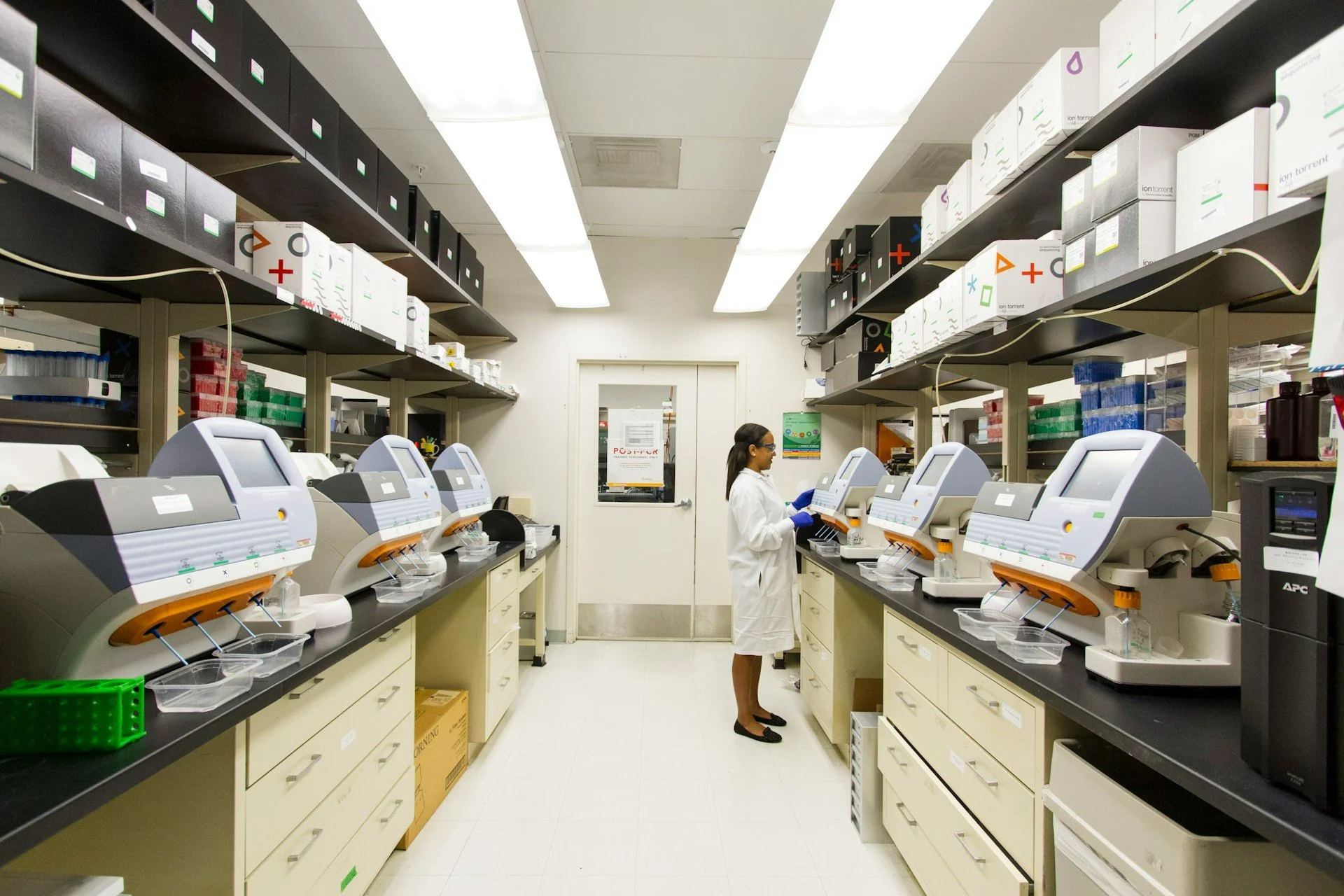
At testblu, we focus on cell-free DNA circulating in the blood. Using next-generation sequencing (NGS), cfDNA fragments can be read and analysed at scale. We can then study not only the DNA sequence itself, but also how the fragments are structured and distributed.
In particular, analysing cfDNA fragmentation patterns and comparing them with reference cell-type profiles can reveal disease-associated biological signatures. These fragmentomic signatures can also provide information about tissue of origin, helping to distinguish different biological and cancer-associated patterns. Importantly, research has shown that these fragmentomic signatures can remain informative even at very low sequencing depths, supporting the potential of cost-efficient, shallow whole-genome sequencing approaches.
Where does AI come in?
A single blood sample can contain millions of cfDNA fragments and multiple overlapping biological signals. Identifying meaningful patterns within this complex data is therefore a challenging computational problem. This is where machine learning can help. Machine-learning models can analyse fragmentomic and other cfDNA features and learn patterns associated with disease.
Different approaches can be applied, including: Random Forest, Gradient Boosting, Support Vector Machines, Deep Neural Networks.
These approaches can be used to analyse fragmentomic signatures and support cancer detection and tissue-of-origin classification.
At testblu, we are exploring how these computational approaches can be combined with liquid biopsy and next-generation sequencing to identify cancer-associated patterns in dogs.
What makes our approach unique?
testblu brings together liquid biopsy, next-generation sequencing, fragmentomics and artificial intelligence to develop a minimally invasive approach to early cancer detection.
Rather than relying on a single biomarker, our approach explores multiple complementary signals within cfDNA. By integrating these different biological signals, we aim to develop more robust and informative AI-based cancer detection and tissue-of-origin classification.
A key part of our approach is also explainability. We are exploring how AI can help us understand which biological signals contribute to a prediction, rather than treating the model simply as a black box. This supports the development of transparent and trustworthy AI-based diagnostics.
Our CaniSense platform applies this technological approach to canine cancer detection, with the longer-term vision of developing AI-powered multi-cancer detection. We are also continuously expanding our clinical data through collaboration with veterinarians, researchers and dog owners. These clinical results contribute to the ongoing development and refinement of our AI models.